I was recently asked to show some
work at a University in the north of England, by an academic I'd met at a
conference on anatomical collection. He’d seen my presentation “Making myself a
Monster”, which I’ve posted in its entirety earlier in this blog, and wanted me
to show work to his History of Medicine students that would challenge and
stimulate them to think differently about the body and its forms of
representation. I duly set off with a number of pieces, which ranged from
drawings of anatomical specimens to boxed assemblages and life masks.
 Within an hour of hanging – and
before, in fact, many of the pieces had gone up – I had a call saying that the
head of the school had decided that the majority of the work was
'inappropriate', and requesting that it be removed. A number of pieces that
were rejected featured drawings of teratological specimens, and in that case I
can understand their concern – the venue is in close proximity to Alder Hey, and
the echoes of that scandal continue to be felt in the public conscious. However
most of the work deemed 'inappropriate' was not human anatomy, but contained,
among other ephemera, specimens or drawings of dead animals. The content of
these artworks ranged from an entire animal (cat, mouse, bird) to some with
small bones in amongst the other found objects that I use in assemblages.
Within an hour of hanging – and
before, in fact, many of the pieces had gone up – I had a call saying that the
head of the school had decided that the majority of the work was
'inappropriate', and requesting that it be removed. A number of pieces that
were rejected featured drawings of teratological specimens, and in that case I
can understand their concern – the venue is in close proximity to Alder Hey, and
the echoes of that scandal continue to be felt in the public conscious. However
most of the work deemed 'inappropriate' was not human anatomy, but contained,
among other ephemera, specimens or drawings of dead animals. The content of
these artworks ranged from an entire animal (cat, mouse, bird) to some with
small bones in amongst the other found objects that I use in assemblages.
 Why should some people - who
happily eat meat, wear leather or fur, and set traps for mice - object to being
confronted with animal remains on display in a gallery? Why is the notion of
animal framed and re-contextualised as art so much more disturbing than the chewing
and digesting of them, wearing them, shooting them for sport, or killing them
as pests? There is a disturbing dualism
at play here; sentimentality at odds with a brutal indifference. Furthermore,
there is the sense that their own dislike of the work has had to be re-framed
as a moral issue, with the offended parties casting themselves as gatekeepers
of propriety: deciding what is best, on behalf of others who will then have no
opportunity to see the work that they are being saved from. As Steve Baker says
in his book ‘Artist/Animal’,
Why should some people - who
happily eat meat, wear leather or fur, and set traps for mice - object to being
confronted with animal remains on display in a gallery? Why is the notion of
animal framed and re-contextualised as art so much more disturbing than the chewing
and digesting of them, wearing them, shooting them for sport, or killing them
as pests? There is a disturbing dualism
at play here; sentimentality at odds with a brutal indifference. Furthermore,
there is the sense that their own dislike of the work has had to be re-framed
as a moral issue, with the offended parties casting themselves as gatekeepers
of propriety: deciding what is best, on behalf of others who will then have no
opportunity to see the work that they are being saved from. As Steve Baker says
in his book ‘Artist/Animal’,
“…accusations of offensiveness lump together aesthetic distaste and moral outrage, as they often do in public responses to contemporary animal art…”

 The problem I have with working
with remains is not the fact of their provenance, but that, while beautiful,
they are very powerful objects, containing so much emotional resonance in
relation to the awareness of mortality. Bones are hard to work with. Bones are
bones, skulls are skulls, and their effect as representations of death makes
them such striking objects in their own right that using them as art materials
creates difficulties in the same way as working with text; decorative and
beautiful, but difficult to divorce from its meaning - difficult not to read. People
read the language of bones in very specific ways.
The problem I have with working
with remains is not the fact of their provenance, but that, while beautiful,
they are very powerful objects, containing so much emotional resonance in
relation to the awareness of mortality. Bones are hard to work with. Bones are
bones, skulls are skulls, and their effect as representations of death makes
them such striking objects in their own right that using them as art materials
creates difficulties in the same way as working with text; decorative and
beautiful, but difficult to divorce from its meaning - difficult not to read. People
read the language of bones in very specific ways.
 I take several approaches to this
problem: one is simply to present the animal remains as I found them, laid out
and boxed whole, a record of the transience of life and the structure of
remains. Another is to reconstruct them into other, still beautiful, objects:
wearable objects, such as fascinators, or rearranged into new work, to use the
bones and fur and skin as materials in the same way as I would use other found
objects such as buttons, paper ephemera, shells, or broken watches. The
symbolism of the Vanitas pervades all this work, so perhaps in essence I'm not
really changing the narrative of the remains. Other artists have worked with
remains more directly: painting or drawing on them, covering them with other
materials. I have been experimenting with painting or drawing
the remains, and using this work - a step removed from the original material -
in the boxes instead. Or covering them with gold leaf, or fur from a different
animal, or paper - text or music notation - to force a shift in appearance, and
therefore meaning.
I take several approaches to this
problem: one is simply to present the animal remains as I found them, laid out
and boxed whole, a record of the transience of life and the structure of
remains. Another is to reconstruct them into other, still beautiful, objects:
wearable objects, such as fascinators, or rearranged into new work, to use the
bones and fur and skin as materials in the same way as I would use other found
objects such as buttons, paper ephemera, shells, or broken watches. The
symbolism of the Vanitas pervades all this work, so perhaps in essence I'm not
really changing the narrative of the remains. Other artists have worked with
remains more directly: painting or drawing on them, covering them with other
materials. I have been experimenting with painting or drawing
the remains, and using this work - a step removed from the original material -
in the boxes instead. Or covering them with gold leaf, or fur from a different
animal, or paper - text or music notation - to force a shift in appearance, and
therefore meaning.

In which case, why use animal remains at all? Why not casts, or papier-maché, or something else entirely? I suppose there is something intrinsically 'authentic' about the remains – their organic nature, a reference to death and change – perhaps it all just comes back to the Vanitas, a reminder of our mortality which is often hidden or disguised in contemporary life. A group of my teenaged art students were horrified by my recent description of 'Hello Kitty' (the first work to go from this exhibition).They asked if I had an obsession with death. I said no, merely an acceptance of the fact that I was going to die, as all living things must. When I added that they too were going to die, one girl said she was going to tell her mum. I pointed out that her mother was going to die as well...


 Why should some people - who
happily eat meat, wear leather or fur, and set traps for mice - object to being
confronted with animal remains on display in a gallery? Why is the notion of
animal framed and re-contextualised as art so much more disturbing than the chewing
and digesting of them, wearing them, shooting them for sport, or killing them
as pests? There is a disturbing dualism
at play here; sentimentality at odds with a brutal indifference. Furthermore,
there is the sense that their own dislike of the work has had to be re-framed
as a moral issue, with the offended parties casting themselves as gatekeepers
of propriety: deciding what is best, on behalf of others who will then have no
opportunity to see the work that they are being saved from. As Steve Baker says
in his book ‘Artist/Animal’,
Why should some people - who
happily eat meat, wear leather or fur, and set traps for mice - object to being
confronted with animal remains on display in a gallery? Why is the notion of
animal framed and re-contextualised as art so much more disturbing than the chewing
and digesting of them, wearing them, shooting them for sport, or killing them
as pests? There is a disturbing dualism
at play here; sentimentality at odds with a brutal indifference. Furthermore,
there is the sense that their own dislike of the work has had to be re-framed
as a moral issue, with the offended parties casting themselves as gatekeepers
of propriety: deciding what is best, on behalf of others who will then have no
opportunity to see the work that they are being saved from. As Steve Baker says
in his book ‘Artist/Animal’,“…accusations of offensiveness lump together aesthetic distaste and moral outrage, as they often do in public responses to contemporary animal art…”
So why do I work with animal
remains? This is not something I've ever asked myself - or indeed been asked.
If I had to make a statement of some kind, I would say that I find something
beautiful and compelling in the bones and skins of formerly living creatures -
the static remnants, preserved by nature, decayed, decomposed and dried, so
redolent of their former life but transformed by death into something else. I
don't kill things, but pick them up as I find them. Sometimes, if the little
corpses are still too fresh to keep, I bury them in my allotment and use the
bones after the earth has done its work.

I am not alone in seeing beauty in
decay.
 The problem I have with working
with remains is not the fact of their provenance, but that, while beautiful,
they are very powerful objects, containing so much emotional resonance in
relation to the awareness of mortality. Bones are hard to work with. Bones are
bones, skulls are skulls, and their effect as representations of death makes
them such striking objects in their own right that using them as art materials
creates difficulties in the same way as working with text; decorative and
beautiful, but difficult to divorce from its meaning - difficult not to read. People
read the language of bones in very specific ways.
The problem I have with working
with remains is not the fact of their provenance, but that, while beautiful,
they are very powerful objects, containing so much emotional resonance in
relation to the awareness of mortality. Bones are hard to work with. Bones are
bones, skulls are skulls, and their effect as representations of death makes
them such striking objects in their own right that using them as art materials
creates difficulties in the same way as working with text; decorative and
beautiful, but difficult to divorce from its meaning - difficult not to read. People
read the language of bones in very specific ways. I take several approaches to this
problem: one is simply to present the animal remains as I found them, laid out
and boxed whole, a record of the transience of life and the structure of
remains. Another is to reconstruct them into other, still beautiful, objects:
wearable objects, such as fascinators, or rearranged into new work, to use the
bones and fur and skin as materials in the same way as I would use other found
objects such as buttons, paper ephemera, shells, or broken watches. The
symbolism of the Vanitas pervades all this work, so perhaps in essence I'm not
really changing the narrative of the remains. Other artists have worked with
remains more directly: painting or drawing on them, covering them with other
materials. I have been experimenting with painting or drawing
the remains, and using this work - a step removed from the original material -
in the boxes instead. Or covering them with gold leaf, or fur from a different
animal, or paper - text or music notation - to force a shift in appearance, and
therefore meaning.
I take several approaches to this
problem: one is simply to present the animal remains as I found them, laid out
and boxed whole, a record of the transience of life and the structure of
remains. Another is to reconstruct them into other, still beautiful, objects:
wearable objects, such as fascinators, or rearranged into new work, to use the
bones and fur and skin as materials in the same way as I would use other found
objects such as buttons, paper ephemera, shells, or broken watches. The
symbolism of the Vanitas pervades all this work, so perhaps in essence I'm not
really changing the narrative of the remains. Other artists have worked with
remains more directly: painting or drawing on them, covering them with other
materials. I have been experimenting with painting or drawing
the remains, and using this work - a step removed from the original material -
in the boxes instead. Or covering them with gold leaf, or fur from a different
animal, or paper - text or music notation - to force a shift in appearance, and
therefore meaning. 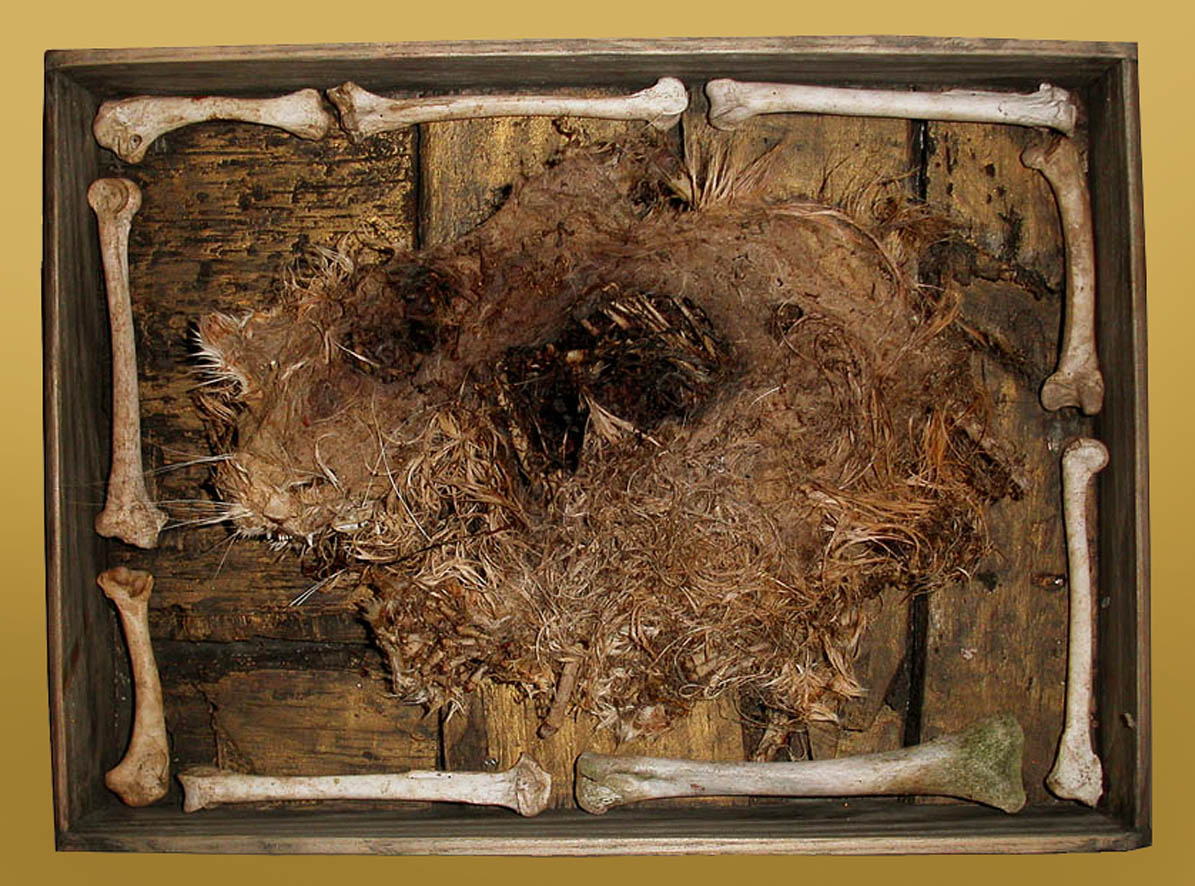
In which case, why use animal remains at all? Why not casts, or papier-maché, or something else entirely? I suppose there is something intrinsically 'authentic' about the remains – their organic nature, a reference to death and change – perhaps it all just comes back to the Vanitas, a reminder of our mortality which is often hidden or disguised in contemporary life. A group of my teenaged art students were horrified by my recent description of 'Hello Kitty' (the first work to go from this exhibition).They asked if I had an obsession with death. I said no, merely an acceptance of the fact that I was going to die, as all living things must. When I added that they too were going to die, one girl said she was going to tell her mum. I pointed out that her mother was going to die as well...

I suspect my career as a teacher
will be as short as my exhibition – but that is in itself a reflection of the
way that death is denied in current culture: the 'disneyfication' of the
reality that life is, oftentimes, short and brutal and remarkably lacking in
talking cats and rainbow coloured horses.

None of this really explains why I like to use this material. But I'm not certain, in the end, that I really need to. The work speaks its own language, at a visceral level, to those who not too hampered by their conservatism to read it.